Last updated November 23, 2026
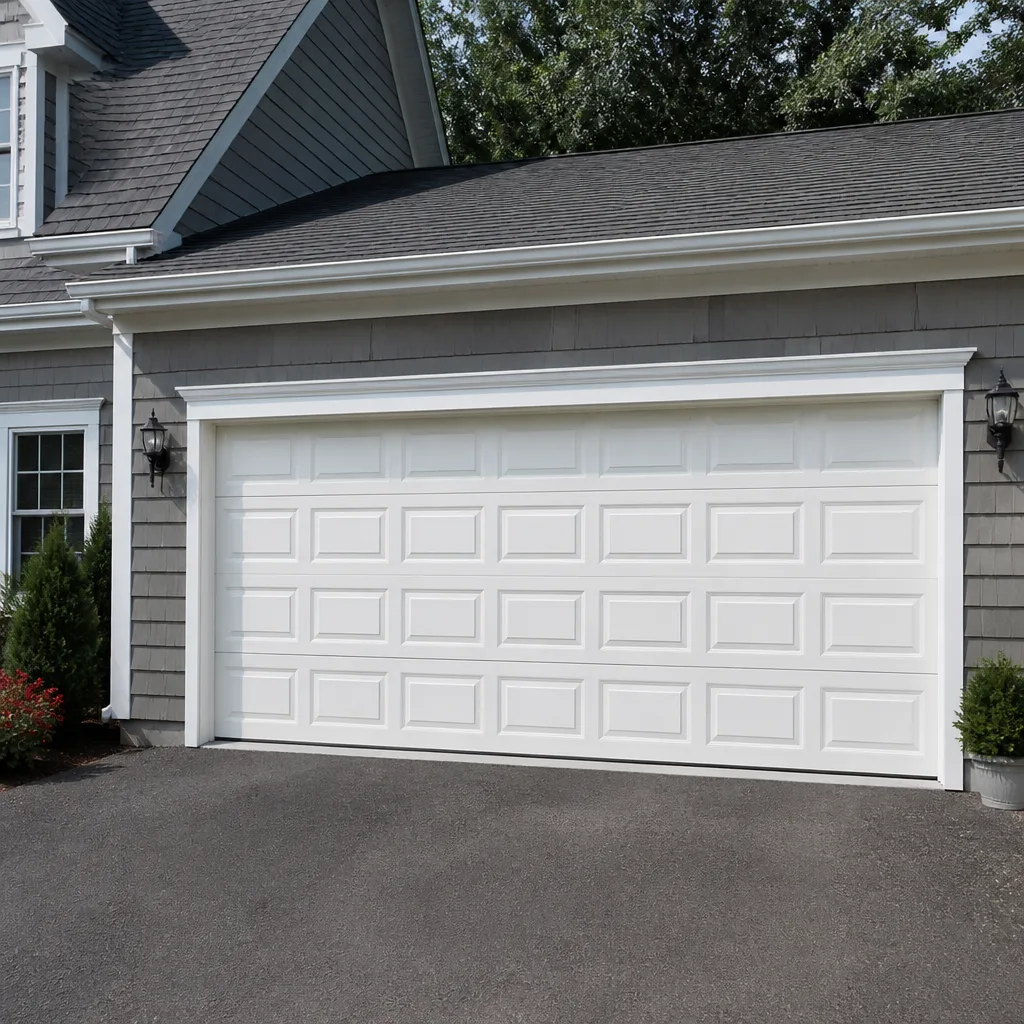 Raised-panel steel
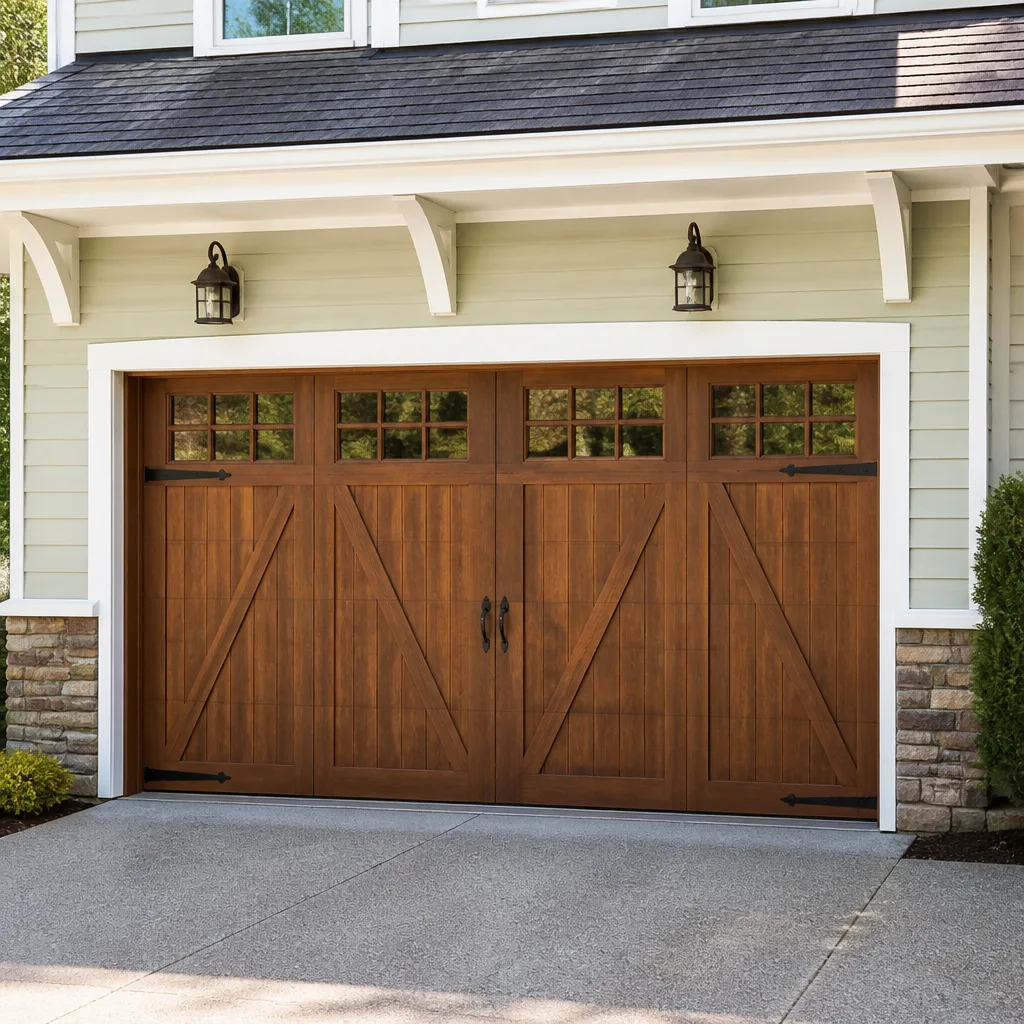 Carriage house
 Modern flush
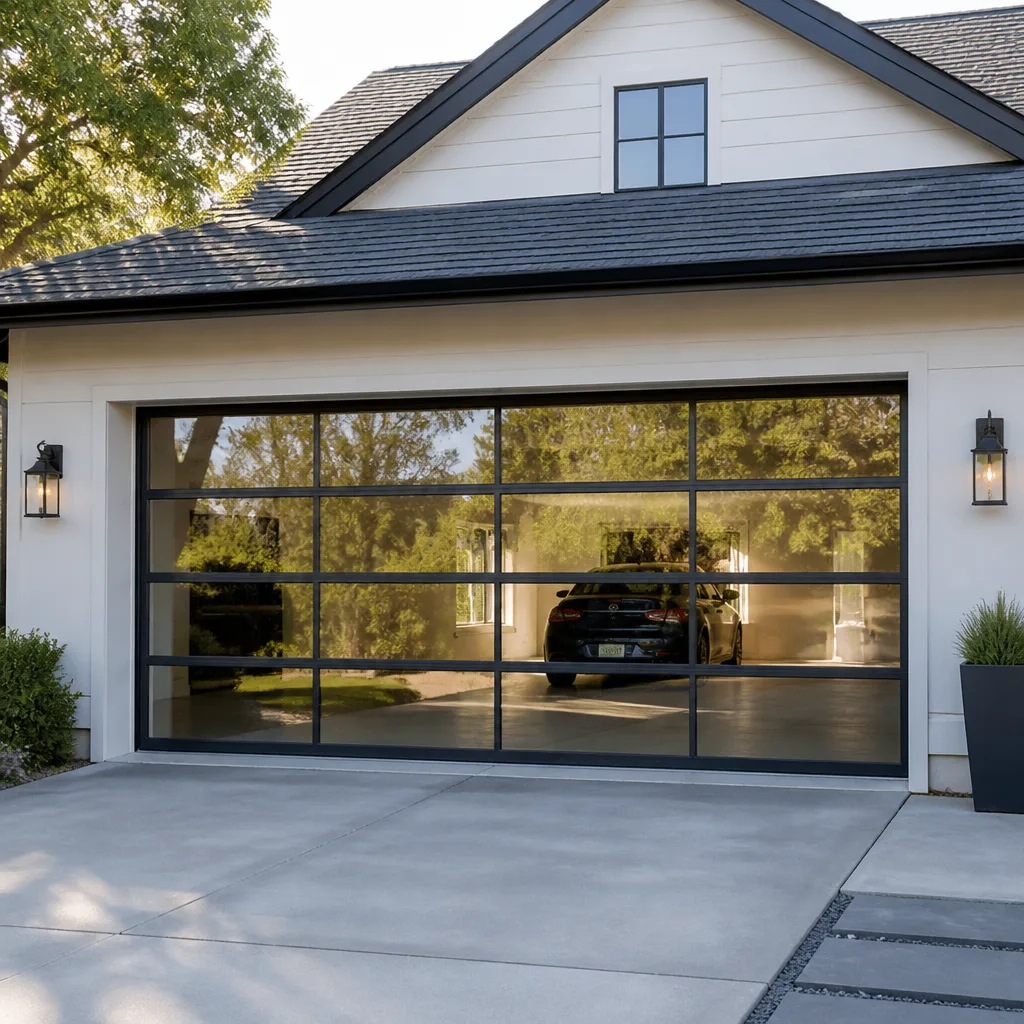 Full-view glass
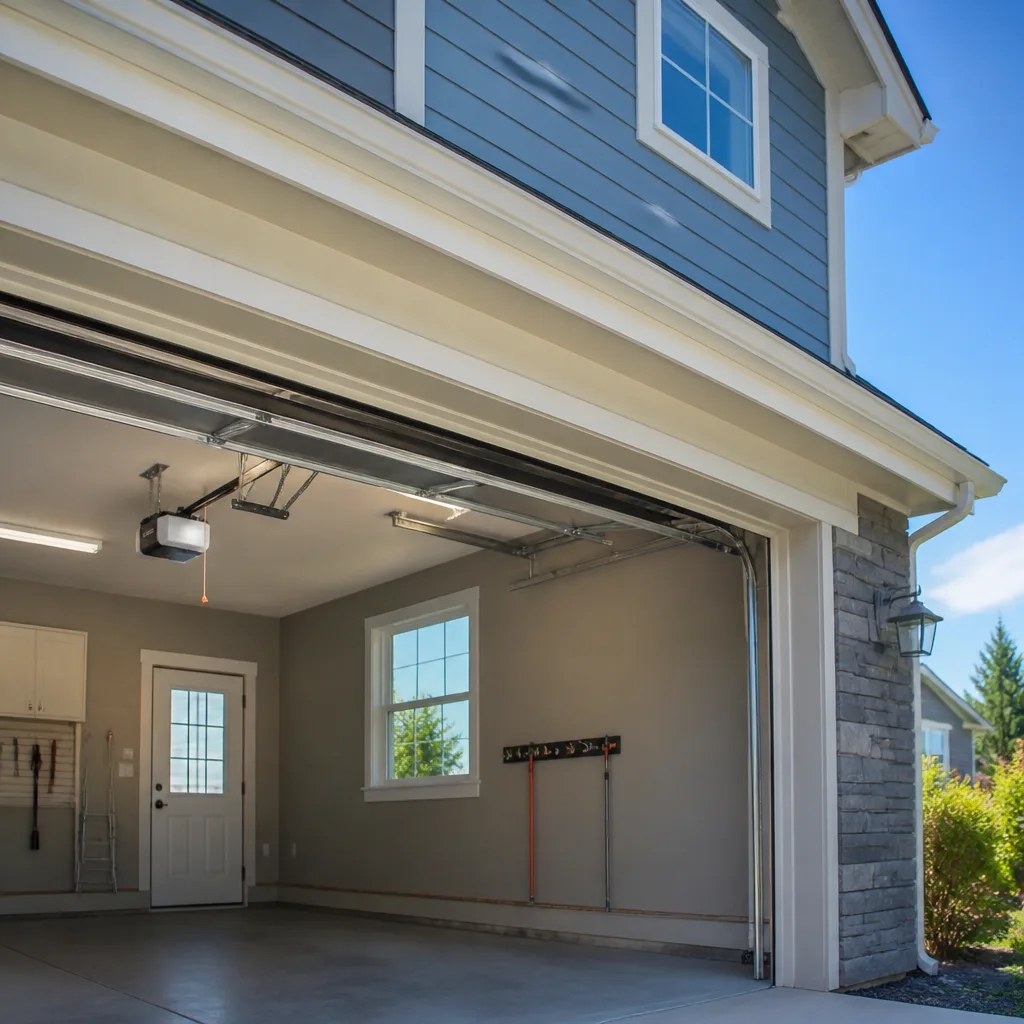 LiftMaster openers
 Chamberlain openers
Full 25-point door and opener safety check with every visit - springs, cables, rollers, tracks, and your LiftMaster or Chamberlain opener included
You get a price before we start. It does not change when the pro arrives.
Get your free estimateGarage Door Permits, Codes & Inspections in Tallyn’s Reach, CO: What You Need to Know
Most homeowners assume a garage door swap never touches the permit office. That assumption is where the trouble starts. Real estate attorneys in Douglas County regularly see closings stall over unpermitted garage door work, and the reason usually isn’t a picky inspector. It’s that the seller never knew a permit was required in the first place. A garage door replacement in Tallyn’s Reach can cross into permit territory the moment the work involves structural changes, a new opening, or anything beyond a true like-for-like swap. This guide walks through when a permit is required, how HOA architectural approval runs alongside county permitting, what Colorado’s energy code expects of an insulated door, and how to fix past work that skipped the process.
Quick Answer
A simple like-for-like garage door replacement in Tallyn’s Reach generally does not require a building permit. Any project that changes the structural opening, alters framing or headers, adds a new door where none existed, or changes the door’s size or configuration typically does require a permit from Douglas County. Arapahoe County rules apply to nearby parcels that fall on that side of the line. When in doubt, call the county building department before you order the door, and remember that HOA architectural approval is a separate step, not a substitute for permitting.
Styles & brands we work with
- Raised-panel steel
- Carriage house
- Modern flush
- Full-view glass
- LiftMaster openers
- Chamberlain openers
Table of Contents
- When does a garage door project require a permit in Tallyn’s Reach?
- What “like-for-like replacement” means under Colorado residential code
- HOA architectural approval in Tallyn’s Reach: how it runs parallel to county permitting
- Energy code compliance for insulated garage doors in Colorado
- What an inspection actually looks at
- How to permit work that was done without one
- Your disclosure obligation when you sell
- Common mistakes to avoid
When does a garage door project require a permit in Tallyn’s Reach?
The permit threshold comes down to whether the work is a replacement of an existing door in the same opening, or a change to the structure around it. A permit is generally required when the project touches the building’s framing, the opening’s dimensions, the header above the door, or the electrical circuit feeding the opener. A straight swap of a door and its tracks into an unchanged opening usually does not trigger one.
Tallyn’s Reach sits in Douglas County, and the county’s building department is the authority having jurisdiction for most of the community. Some parcels near the county line fall under Arapahoe County instead, so the first practical step is confirming which jurisdiction your address sits in before you file anything. That one check saves weeks of misdirected paperwork.
Here’s how we break down the decision for homeowners:
- Typically no permit: replacing a door of the same size in the same opening, swapping an opener for a comparable unit on the existing circuit, replacing springs, cables, rollers, or hinges.
- Typically a permit: enlarging or reducing the door opening, replacing or modifying the header, reframing the opening, adding a new garage door where there wasn’t one, converting a carport to an enclosed garage, or running a new electrical circuit for an opener.
- Worth a call to the county: changing door type in a way that shifts the load path, such as moving from a sectional door to a roll-up in a wall that wasn’t framed for it.
We tell Tallyn’s Reach homeowners the same thing every time: the ten minutes you spend confirming jurisdiction with the county building department is cheaper than any correction later. If you’re unsure whether your project crosses the line, Garage Door Repair Tallyn’s Reach can talk through the scope with you before you commit to a plan.
What “like-for-like replacement” means under Colorado residential code
Like-for-like replacement means installing a door of the same size, in the same opening, using the same operating system, without changing the structure that carries the load. Colorado residential code treats this kind of swap as a repair rather than an alteration, which is why it’s often exempt from a building permit. The catch is that “like-for-like” is narrower than most people think.
Two common misunderstandings trip up Tallyn’s Reach homeowners. The first is assuming that any replacement door counts as like-for-like just because the garage opening stays the same width. It doesn’t. If you go from a standard sectional door to a carriage-house style that requires new mounting hardware, or you upgrade to a higher-lift track configuration, the installation itself changes and the exemption can fall away. The second misunderstanding is believing the exemption also waives inspection. It doesn’t. The exemption is from the permit, not from code compliance, and a door that doesn’t meet current safety requirements is a door that doesn’t meet code whether or not a permit was pulled.
Under the current code framework, replacement doors are expected to meet the same safety requirements as new doors, including the presence and function of the door’s safety features. The federal standard for automatic reversing systems applies to openers manufactured after 1993, and Colorado’s adoption of the model codes carries that requirement into residential work. A door with a non-reversing opener from before that era is out of compliance even if it’s still working.
A simple test we describe to homeowners needing clarity:
- Same opening? If the width, height, and header position stay untouched, you’re likely in exemption territory.
- Same door configuration? Same style, same track layout, same operating mechanism. Any change here is worth a call to the county.
- Same electrical? A new opener on an existing dedicated circuit is generally fine. A new circuit requires an electrician and typically a permit.
When we handle garage door repair in Tallyn’s Reach, we ask these questions before we schedule anything. Knowing which side of the exemption line your project sits on keeps the work moving and keeps your records clean.
HOA architectural approval in Tallyn’s Reach: how it runs parallel to county permitting
HOA architectural approval is not a substitute for a county permit, and a county permit is not a substitute for HOA approval. In Tallyn’s Reach, both processes can run at the same time, and skipping the HOA step is one of the most common reasons a door installation gets delayed after the door has already been ordered.
Most HOAs in the Tallyn’s Reach area have an architectural review process that covers visible changes to the exterior of a home, and a garage door is almost always on the list. Submission usually requires the door’s make and model, its color, a photo or manufacturer image, and sometimes a spec sheet showing the door meets the community’s design intent. The review typically runs on a committee schedule, so plan the timeline around it instead of treating it as a formality.
Where the two processes diverge matters for your records:
- County permit: documents that the structure meets the building code. It’s a public record and it follows the property.
- HOA approval: documents that the change meets the community’s design standards. It’s a private covenant and it doesn’t appear in county records, but it can be enforced at resale.
- Both together: required if the project involves a permit and a visible change. Neither one clears you on the other.
A door that passes county inspection but was never submitted to the HOA can still trigger a notice of violation. A door the HOA approved but for which no county permit was pulled can delay a closing. We see both types of snarl, and the fix in either case is the same: gather documentation, submit what’s missing, and get written sign-off from each authority that needs to give it.
Energy code compliance for insulated garage doors in Colorado
Colorado’s residential energy code addresses the garage door as part of the building envelope when the garage is attached to the conditioned space. That means an insulated door matters, and the code sets a minimum insulation value the door needs to meet when the garage wall adjoins the home. If you’re replacing a door on an attached garage in Tallyn’s Reach, the insulated door you choose should meet the current code requirement, and the door’s manufacturer spec sheet should document it.
This is where like-for-like gets interesting. Replacing a non-insulated door with another non-insulated door on an attached garage can fail an energy code review even if the size and configuration are identical. The code looks at performance, not just proportion. Detached garages are treated differently because they don’t share a wall with the conditioned envelope, which is why some Tallyn’s Reach properties have fewer restrictions on the door type than others.
On the practical side, insulated doors carry an R-value printed on the manufacturer’s documentation. That number is what an inspector or an energy reviewer will want to see. If you’re choosing between brands, Clopay and Amarr both publish R-values per model, and Wayne Dalton’s insulated lines document performance the same way. We keep that documentation on hand for every door we specify because you’ll need it during the review, and again if you ever sell.
A few things to confirm before you order:
- Is the garage attached or detached? Attached garages face the energy code.
- Does the door’s spec sheet state an R-value? If not, ask for it in writing.
- Does the door meet the current adopted code in Douglas County, or does it meet an older edition? Codes update, and doors that were fine five years ago may not comply today.
- Did the HOA approve this specific model? The one they approved and the one the energy code requires might be different doors.
When the door needs replacing and the question is what to install, our team handles garage door installation in Tallyn’s Reach and can walk through code-compliant options before you order.
What an inspection actually looks at
An inspection confirms that the installed door matches the permitted scope and that the door, its hardware, and its opener meet the code requirements in effect. It’s not a spot-check of how tidy the work looks. The inspector is checking whether the physical installation matches what was approved on paper and whether the safety systems function.
For a garage door permit, here’s the sequence a Tallyn’s Reach homeowner can expect:
- Pre-inspection paperwork. The permit, the approved plans, and the door’s spec sheet are checked against the installed door. If the door on the wall doesn’t match the door on the permit, work stops.
- Structural check. The header, jamb, and track anchoring are examined for compliance with the framing shown on the approved plans. Any modification to the load path needs to match what was approved.
- Safety systems. The door’s automatic reversing function is tested. The photo-eye system, where present, is checked for alignment and function. A door without a working reversing mechanism fails.
- Clearance and operation. The door is operated through its full cycle to confirm it travels smoothly, seats correctly at the floor, and doesn’t bind. The opener’s force settings are checked against the door’s weight.
- Final sign-off. A passing inspection generates a record that stays with the property. That record is what a buyer’s agent will ask for.
We schedule our garage door opener repair and installation work so the door and the opener are ready for inspection at the same time. Inspectors don’t want to come back twice, and neither do you.
How to permit work that was done without one
Retroactive permitting, sometimes called a post-construction permit, is the process for legalizing work that was completed without a permit. Douglas County has a process for this, and the path depends on the age of the work and what the county can verify. It’s not a get-out-of-jail card, but it is a clean way to resolve an open item before it costs you at closing.
The typical sequence looks like this:
- Contact the county building department. Explain the scope of the completed work, the date it was done if known, and your address. Ask what they require for a retroactive permit.
- Gather documentation. The door’s manufacturer spec sheet, photographs of the installation, any receipts from the original work, and any HOA approval documentation are all useful. If the door is still in production, the manufacturer can often supply a current spec sheet.
- File the application. The county issues a permit for the completed work and schedules an inspection.
- Correct any issues. If the inspection finds a code deficiency, the door has to be brought into compliance before the permit can be finalized. That might mean correcting an opener with a non-functioning reversing system or adjusting the door’s operation.
- Get final sign-off. Once the permit closes, the record is clean. That record is what your eventual buyer’s inspector will look for.
Timing matters. Applications that surface a defect in the middle of a real estate transaction are far more stressful than ones filed well ahead of listing. If you’re within a few years of selling, this is worth handling now.
Your disclosure obligation when you sell
Colorado’s seller’s property disclosure requires sellers to disclose known conditions and, depending on the form and circumstances, work done without required permits. The disclosure isn’t optional. If you know that a garage door was replaced in a way that required a permit and no permit was pulled, that knowledge travels with the sale.
The consequences aren’t punitive by default, but they are practical. A buyer’s inspector who spots a newer door with no permit record will flag it. The buyer’s agent will ask for documentation. If there isn’t any, the transaction has to resolve it somehow. Either the seller pays for retroactive permitting during escrow, or the price gets renegotiated to account for the uncertainty, or the sale falls through. Two of those three outcomes are expensive in different ways.
The cleanest line of defense is documentation. A permit record, an inspection sign-off, an HOA approval letter, and the door’s manufacturer spec sheet together tell the whole story. A homeowner in Tallyn’s Reach who has all four has nothing to disclose because nothing is unresolved. One who has none of them has an open item to manage. The difference isn’t the door. It’s the paper trail.
If you’re not sure whether a prior door replacement was permitted, the county will tell you. A quick records request will confirm whether a permit exists. Do that before listing, not during escrow.
Common Mistakes to Avoid
- Assuming like-for-like always means no permit. Like-for-like applies to the door and opening, not to the installation method or the safety systems. A swap that changes track configuration or upgrades to a different opening mechanism isn’t automatically exempt.
- Getting HOA approval and stopping there. HOA approval covers design. It doesn’t clear building code. If the project crosses the permit threshold, you need both.
- Ordering the door before checking jurisdiction. Tallyn’s Reach parcels don’t all sit under the same county. Confirming whether your address is Douglas County or Arapahoe County before you order saves the cost of a restocking fee.
- Ignoring the energy code on attached garages. A door that matches the old door in size but not in insulation value can fail an energy review. Spec sheets matter.
- Assuming a pre-1993 opener is grandfathered in. It isn’t. Automatic reversing has been required since 1993, and a non-reversing opener fails inspection no matter how old it is.
- Waiting until closing to handle an unpermitted door. Retroactive permitting takes time. Starting it during escrow is far more expensive in stress and negotiating leverage than starting it a year earlier.
- Treating the HOA as a rubber stamp. Architectural committees in Tallyn’s Reach meet on a schedule, and a submission that misses the deadline pushes the whole install timeline. Plan the review into the schedule from day one.
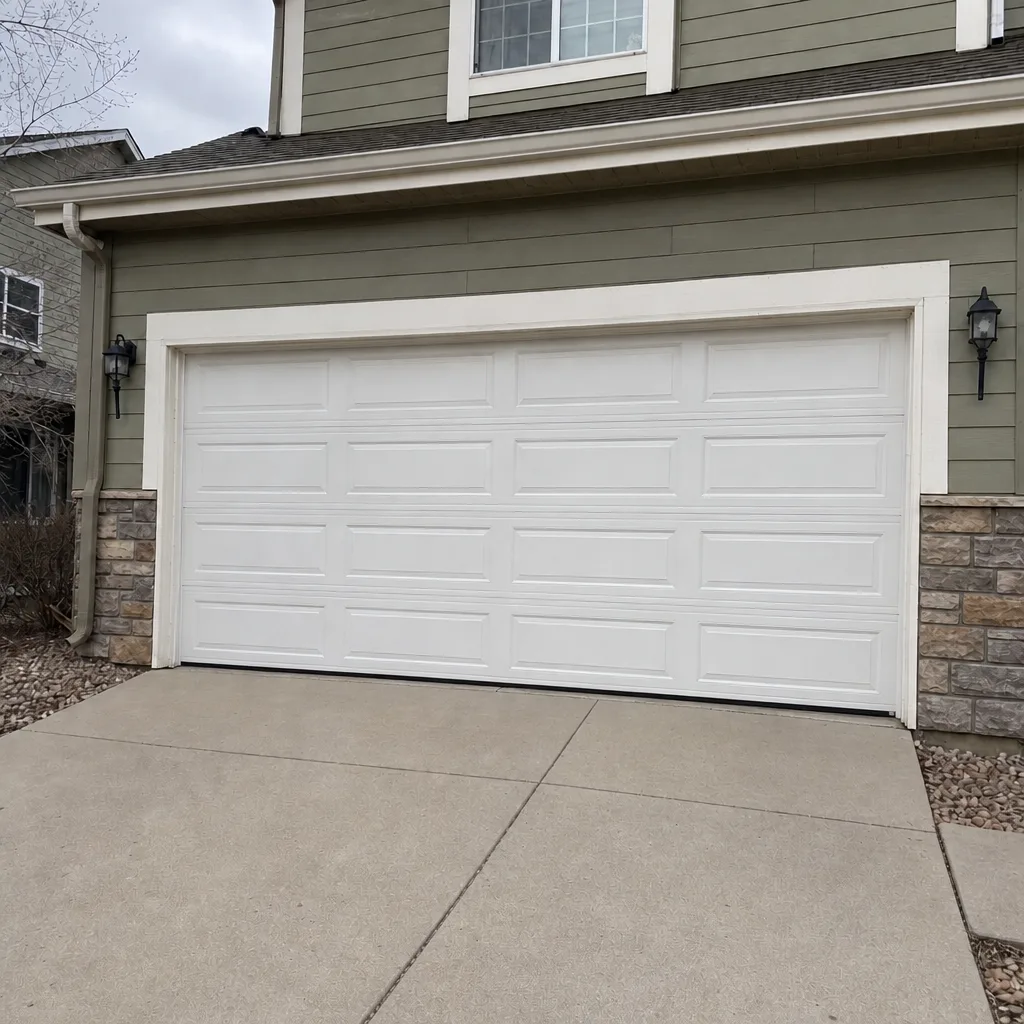
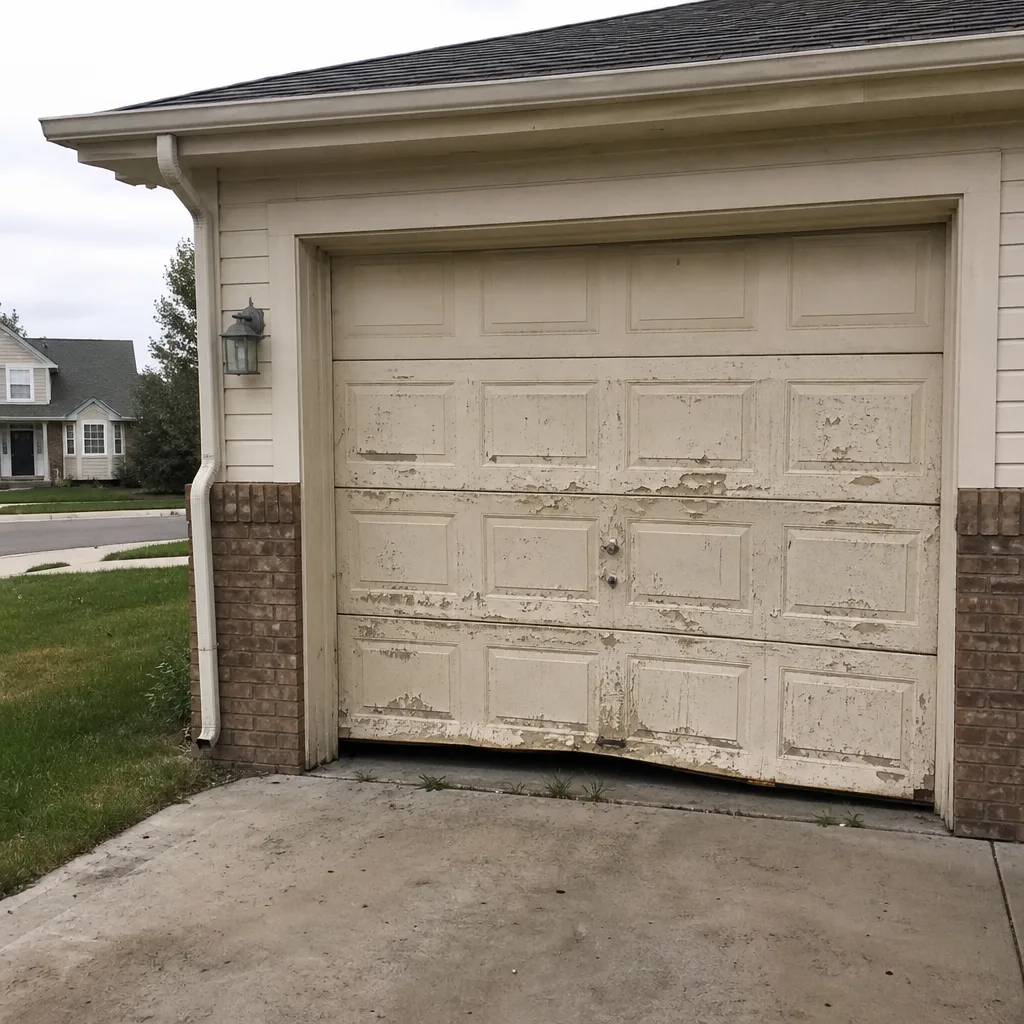
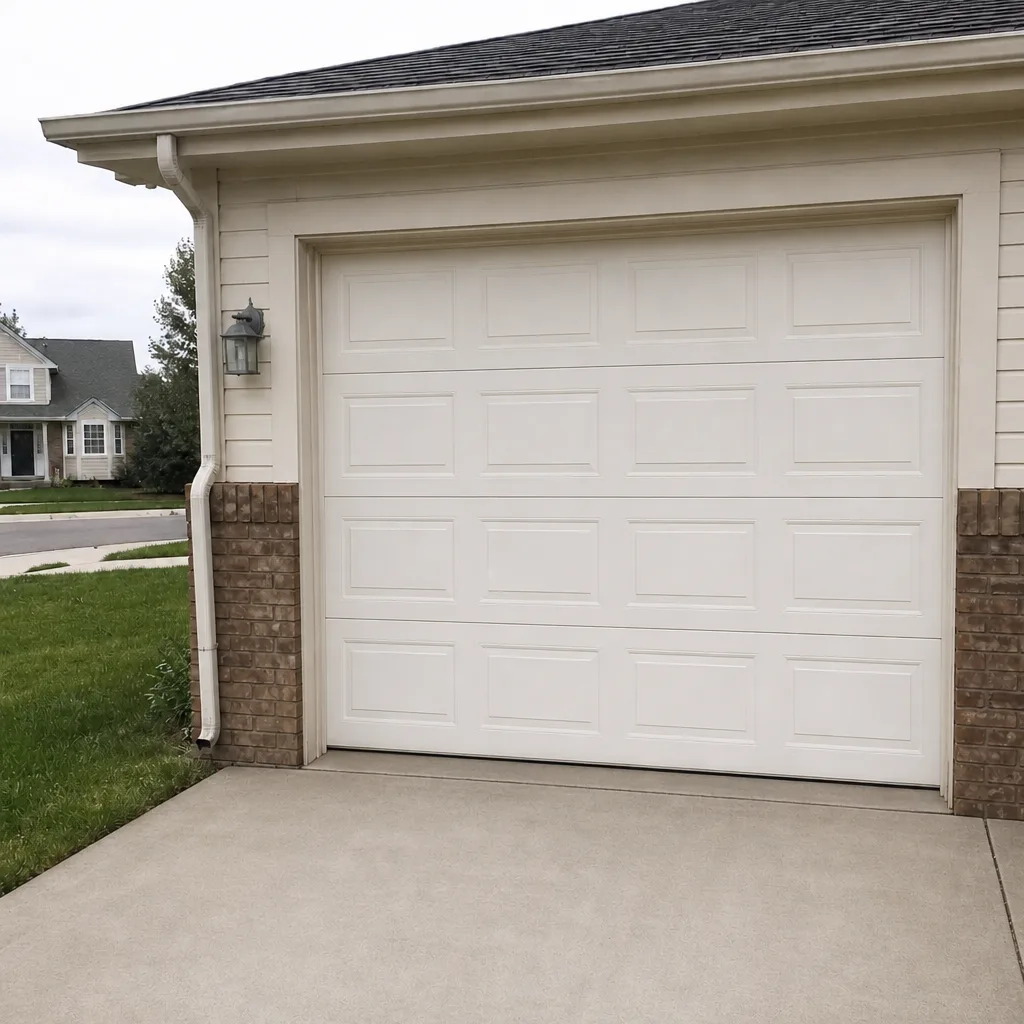
See the difference
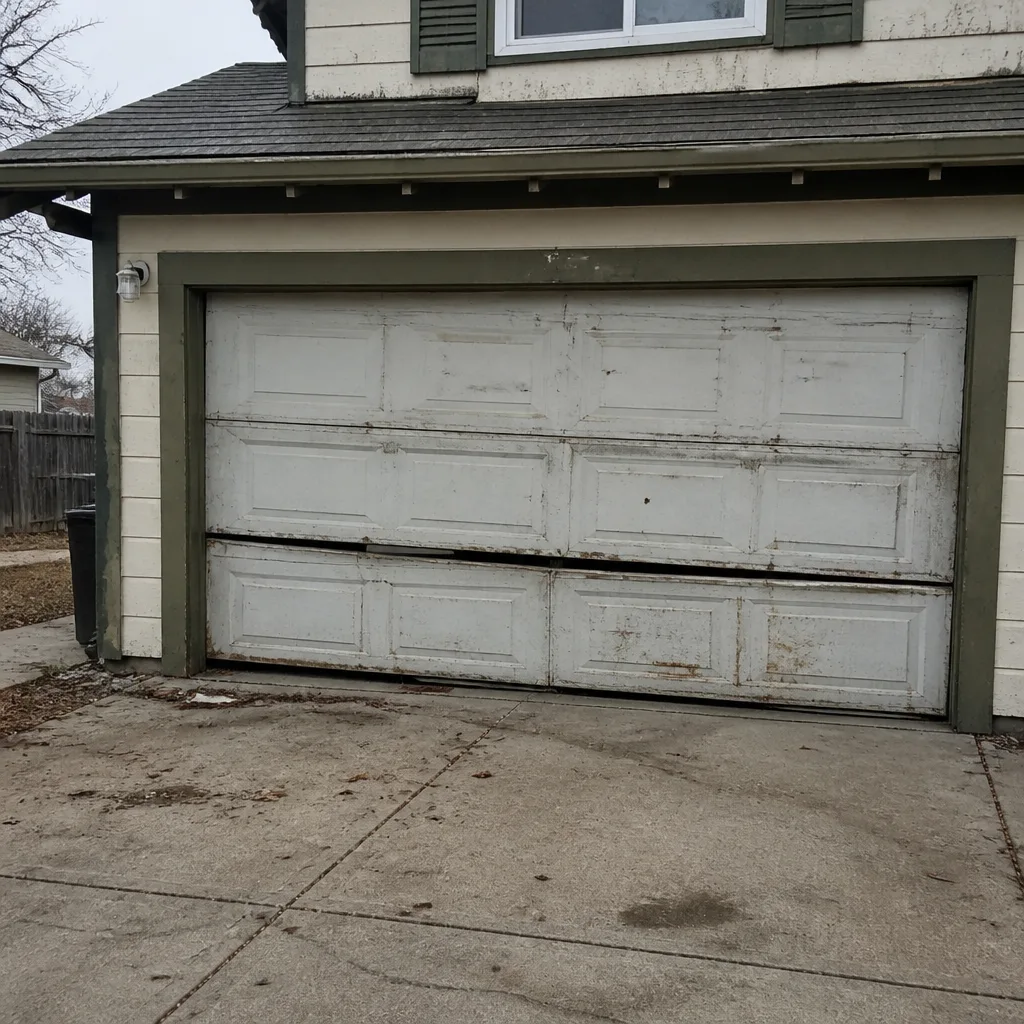 Before
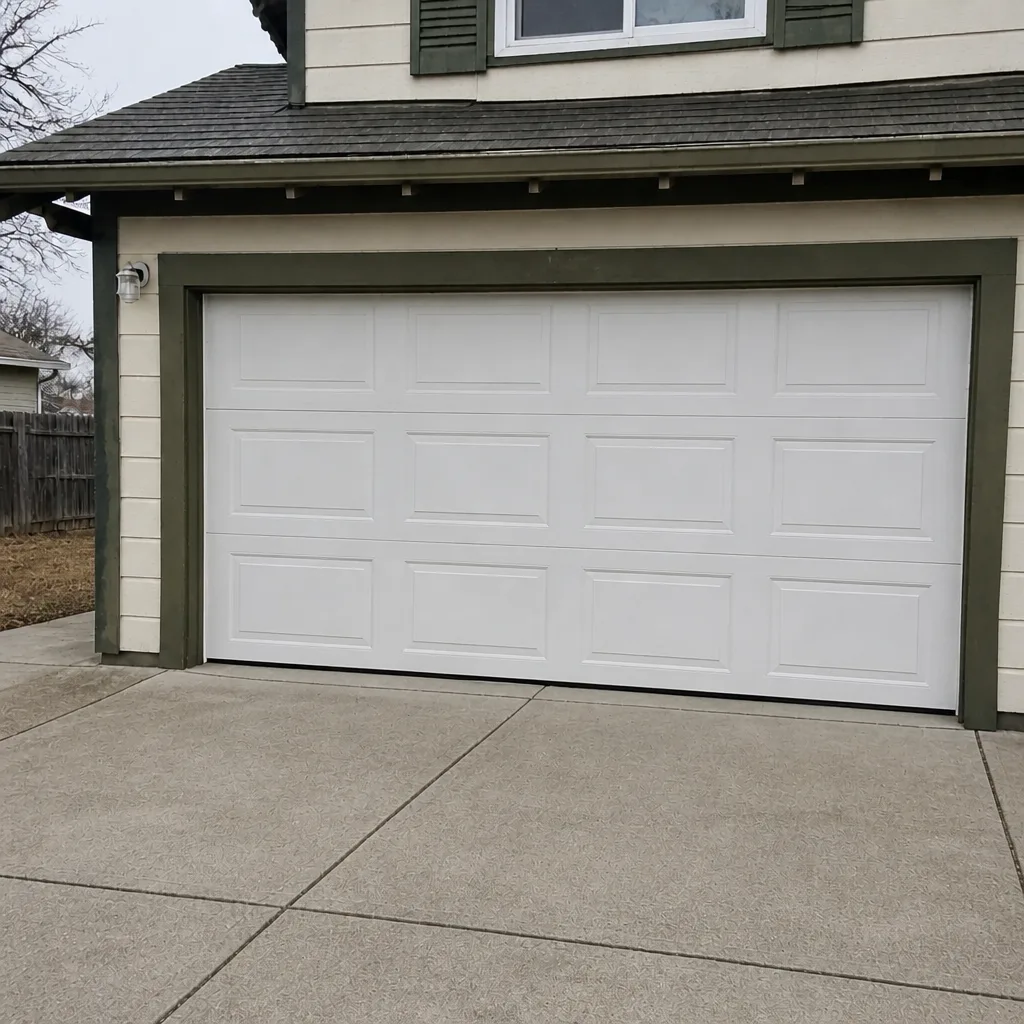 After
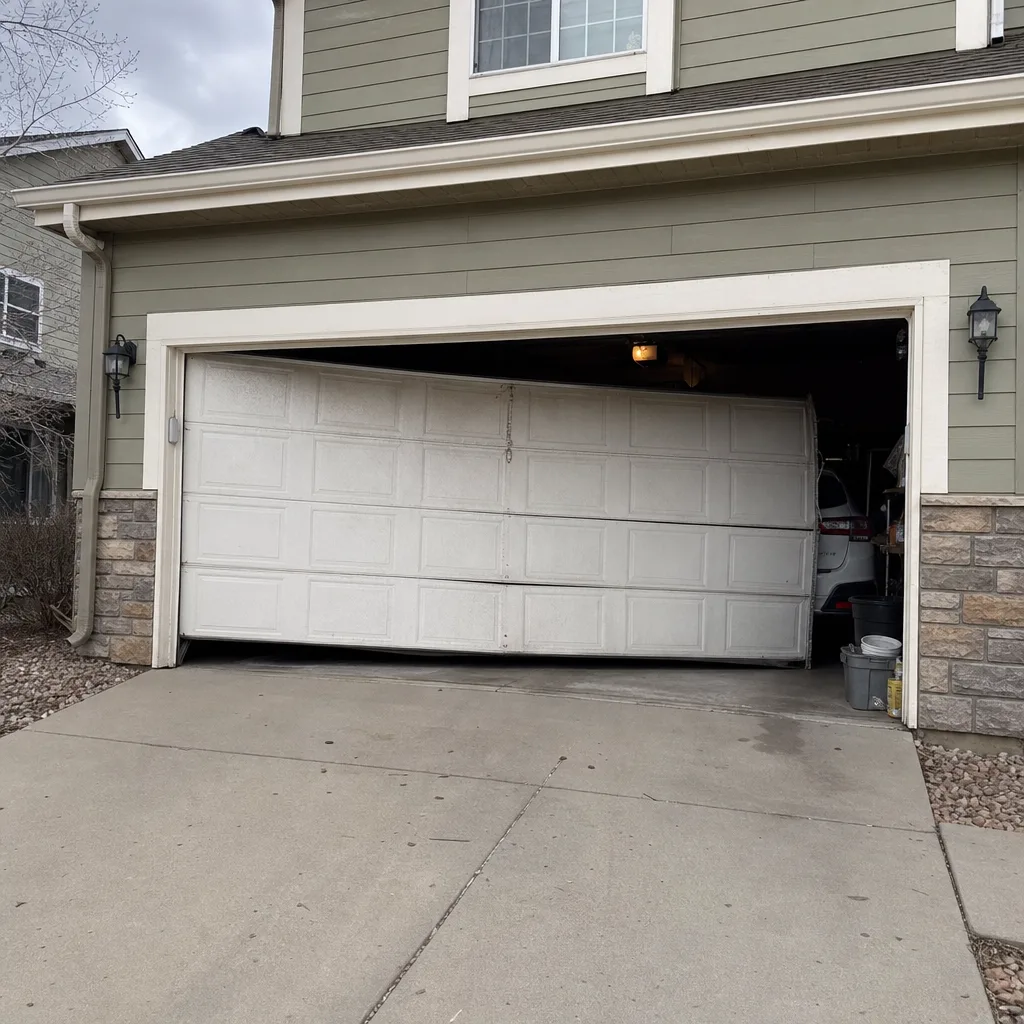 Before
 After
 Before
 After
When to Call a Professional
Some of this work belongs in a homeowner’s hands and some of it doesn’t. Any project that crosses into the permit threshold, involves the door’s springs or cables, or requires a code-compliant installation is work for a trained installer who knows what an inspector will look for. Springs and cables are under high tension and can cause serious injury; we don’t talk homeowners through adjusting them, and we don’t encourage anyone to try. Opener electrical work belongs with a licensed electrician when a new circuit is involved. If the door has come off its tracks, is binding, or has an opener that won’t respond, that’s a call, not a weekend project. Installing a door that meets the energy code on an attached garage in Tallyn’s Reach is a job for a professional who has the spec sheet on hand. Garage Door Repair Tallyn’s Reach offers free estimates in Tallyn’s Reach – call (888) 847-8567.
Frequently Asked Questions
Usually not, if the replacement is a true like-for-like swap into an unchanged opening. A permit is generally required when the work changes the opening’s dimensions, modifies the framing or header, changes the door’s size or configuration, or adds a new electrical circuit for the opener. Confirm your address’s jurisdiction with Douglas County or Arapahoe County before you order, and call (888) 847-8567 for a free estimate on the install itself.
No. HOA architectural approval covers the community’s design standards and is a private covenant, while the county permit covers building code compliance and is a public record. If your Tallyn’s Reach project crosses the permit threshold and changes the exterior appearance, you need both, and neither one clears you on the other. Call (888) 847-8567 to talk through your project’s specifics.
The current residential energy code sets a minimum insulation value for doors on attached garages, and the door’s manufacturer spec sheet is what documents compliance. Because the code updates over time, the requirement in effect on the date of your permit is the one that applies, not the requirement from years ago. The safest path is to choose a door whose spec sheet states the R-value clearly and matches the current adopted code in Douglas County. Estimates on code-compliant doors are free – call (888) 847-8567.
Yes, in most cases. Retroactive permitting (sometimes called a post-construction permit) is a formal process with the county building department. You file for the completed work, provide documentation including the door’s spec sheet and photos, and schedule an inspection. If the inspection finds a code deficiency, the door has to be brought into compliance before the permit can close. Call (888) 847-8567 for a free estimate on any corrections the inspection requires.
The buyer’s inspector will likely flag the door, and your disclosure obligation under Colorado law covers known unpermitted work. The transaction then has to resolve it – either through retroactive permitting during escrow, a price renegotiation, or a failed sale. Having a permit record, inspection sign-off, HOA approval letter, and the door’s spec sheet on hand avoids the problem entirely. Call (888) 847-8567 for a free estimate on getting unpermitted work corrected.
No. Federal law has required automatic reversing systems on garage door openers manufactured after 1993, and Colorado’s adoption of the model codes carries that requirement into residential work. A pre-1993 opener without a working reversing mechanism is out of compliance regardless of its age, and it will fail an inspection. Replacing it is straightforward – call (888) 847-8567 for a free estimate.
The Bottom Line
A garage door replacement in Tallyn’s Reach usually doesn’t require a permit, but the exemption is narrower than it looks. Like-for-like means same door, same opening, same configuration, and – on attached garages – code-compliant insulation. HOA approval and county permitting are separate processes that both matter. Retroactive permitting is a real option if prior work went undocumented, and it’s much cheaper to file before you list than during escrow. The paper trail is what keeps a door replacement from becoming a closing problem. If your door needs repair, replacement, or a code-compliant install, our technicians have up to 8 years of experience and we service all major brands including Clopay, Amarr, Wayne Dalton, and Craftsman.
Call Garage Door Repair Tallyn’s Reach at (888) 847-8567 for a free estimate. We quote the price and agree on it with you before any work starts, so the number you hear is the number you pay.
Written by the team at Garage Door Repair Tallyn’s Reach.